The "Silent Killer"

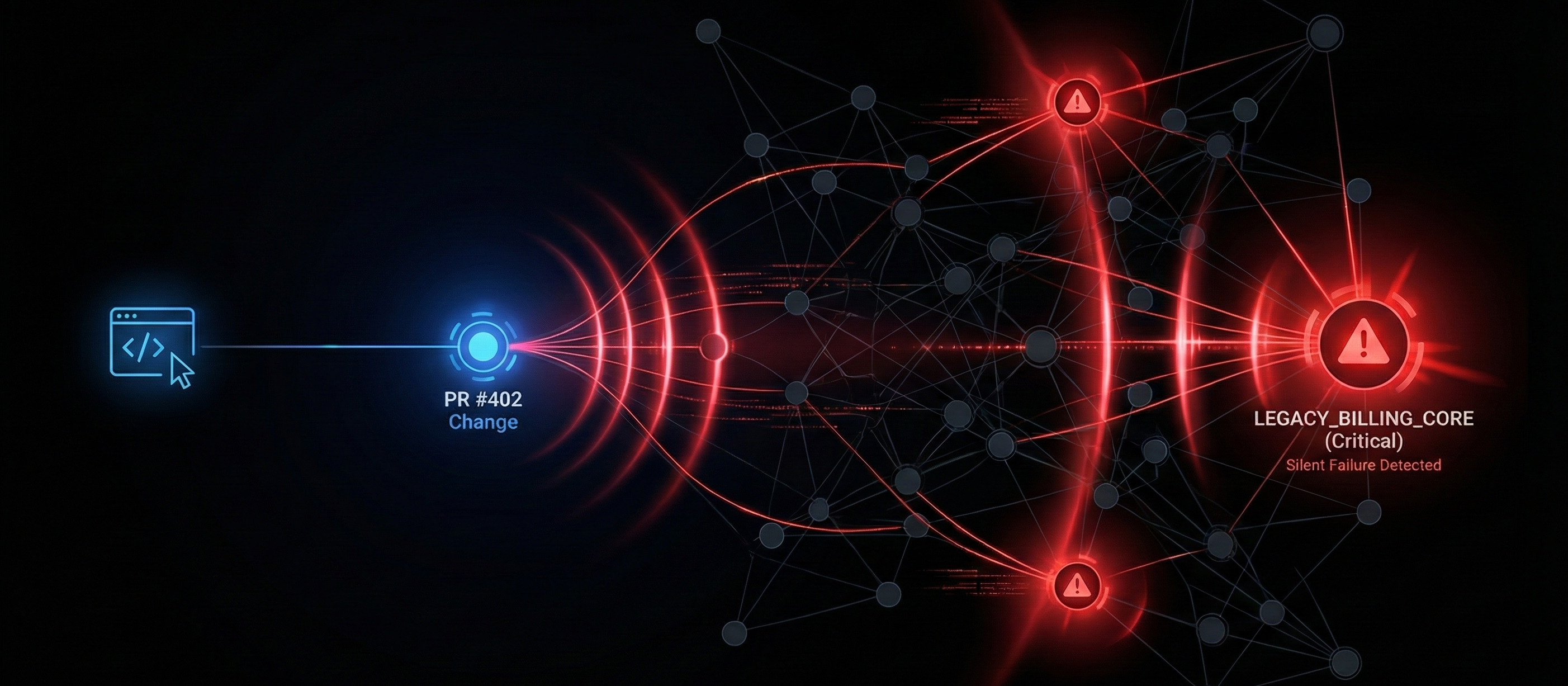
Blast Radius Visualization

The Codebase is Dark Matter.

In 2026, you aren't limited by how fast you can write code. You are limited by how fast you can review it.

When an AI agent (or a junior dev) changes a variable in User.ts, standard linters see no errors. Tests pass.

But three layers deep, a legacy Cron Job relies on that variable. It fails silently. Billing stops. You don't find out for 48 hours.

  • Context Limits: LLMs (Claude, Gemini) only see the files you feed them. They miss the "unknown unknowns."
  • Ripple Effects: 80% of outages are caused by side effects in dependencies the author didn't know existed.
"Stop debugging disasters. Start predicting them."

The Moat

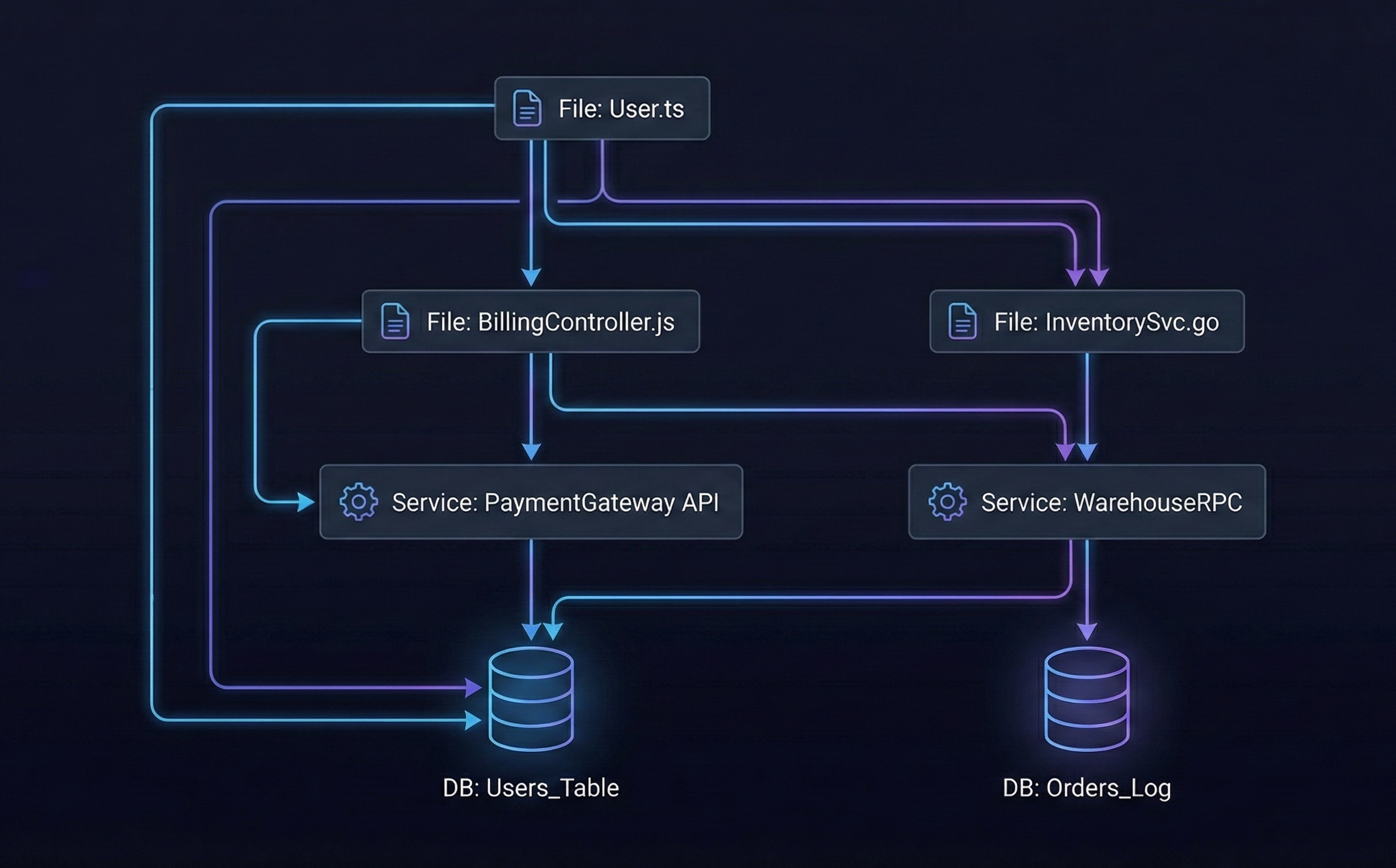
Dependency Graph

LLMs hallucinate. Graphs don't.

We don't just "ask the AI" what might break. We use a deterministic approach to feed the AI the right context.

1. The Map (Deterministic)

We ingest your repo to build a symbolic dependency graph (AST + Call Graph). We know exactly what calls what, across files and services.

2. The Investigation (Probabilistic)

When a PR is opened, we trace the graph to find every "suspect" file—even those not in the PR. We feed only those relevant files to our reasoning engine.

3. The Verdict

You get a Risk Score and a Rollout Plan. "If you merge this, InvoiceService will break. Add a test case here first."

See it in Action

Early Access Pilot

We are currently onboarding 5 engineering teams for our Concierge Alpha.

We will manually audit your critical path PRs and fine-tune our graph on your architecture.
Request Audit

Join the pilot program. We are looking for teams with complex TypeScript, Python, or Go repositories.